
Rust doesn’t happen because metal is weak. It happens because iron, oxygen, and moisture are constantly trying to react with each other, and left unprotected, that reaction never really stops until the metal is gone. A rust coating works by interrupting that reaction at the surface, either by physically blocking oxygen and moisture from reaching bare metal or by chemically changing the corrosion process itself. This guide breaks down exactly how these coatings work, the main types available, and how to think through choosing the right one for your project.
What Causes Rust in the First Place?
Rust, technically iron oxide, forms when iron or steel is exposed to both oxygen and moisture at the same time. The two react at the metal’s surface, gradually converting solid metal into a reddish-brown oxide that flakes away, exposing fresh metal underneath to continue the same reaction. Left unchecked, this process eats through metal from the outside in, which is why rust damage tends to accelerate rather than stay contained to the surface.
Certain conditions speed this process up considerably. Salt, whether from coastal air, road de-icing, or marine exposure, dramatically accelerates corrosion because it improves the electrical conductivity of the moisture film on a metal surface, which is exactly what the corrosion reaction needs to keep moving. Humidity, temperature swings, and physical abrasion that removes protective layers all play a role as well.
How Rust Coatings Actually Stop Corrosion
Most rust coating works through one of two basic mechanisms, and understanding the difference matters when choosing a product.
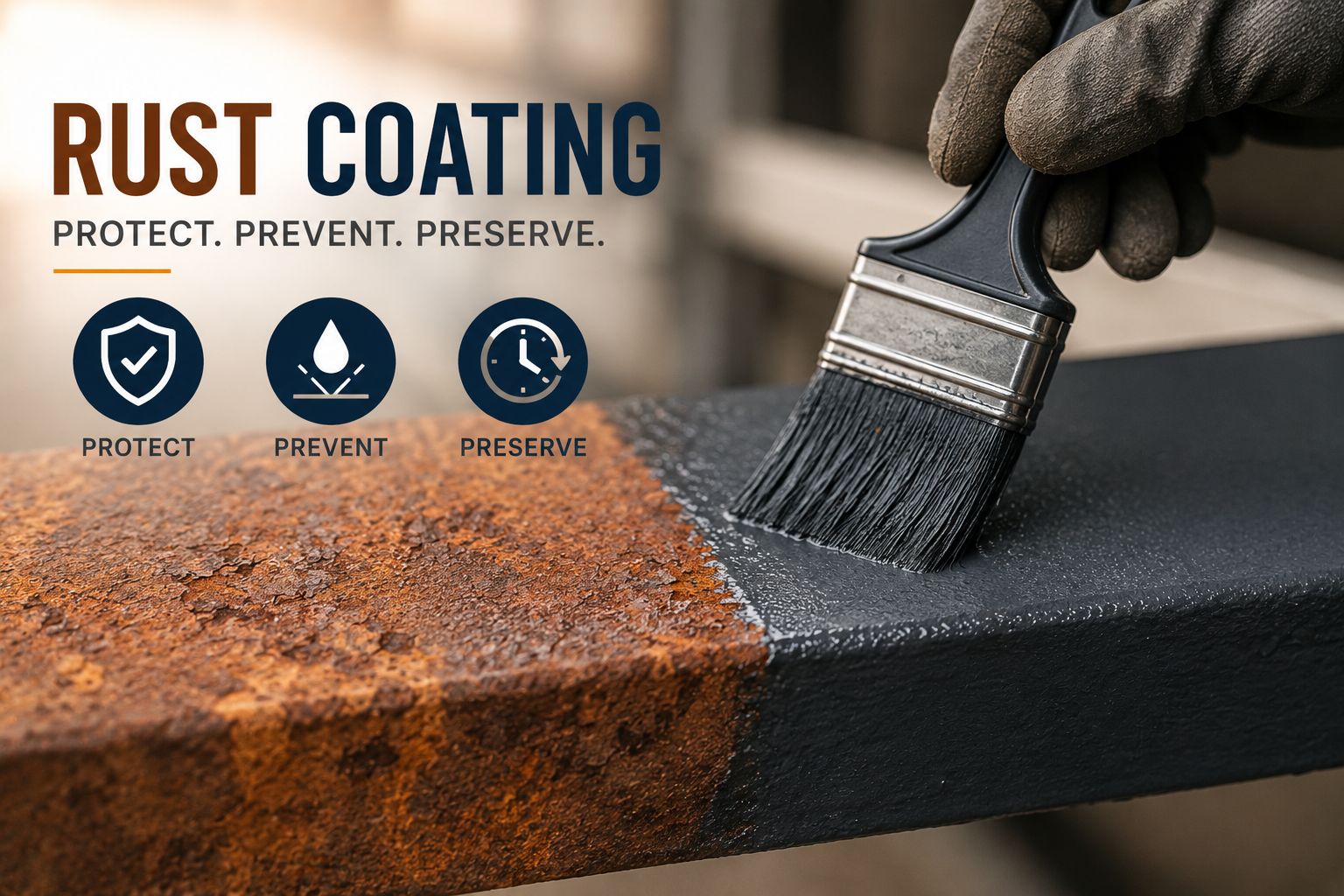
Barrier protection is the more common approach. The coating forms a physical film over the metal surface, sealing out the oxygen and moisture that corrosion depends on. As long as the barrier stays intact, with no scratches, chips, or gaps, the metal underneath is protected. This is how most epoxy, polyurethane, and enamel-based rust coatings function.
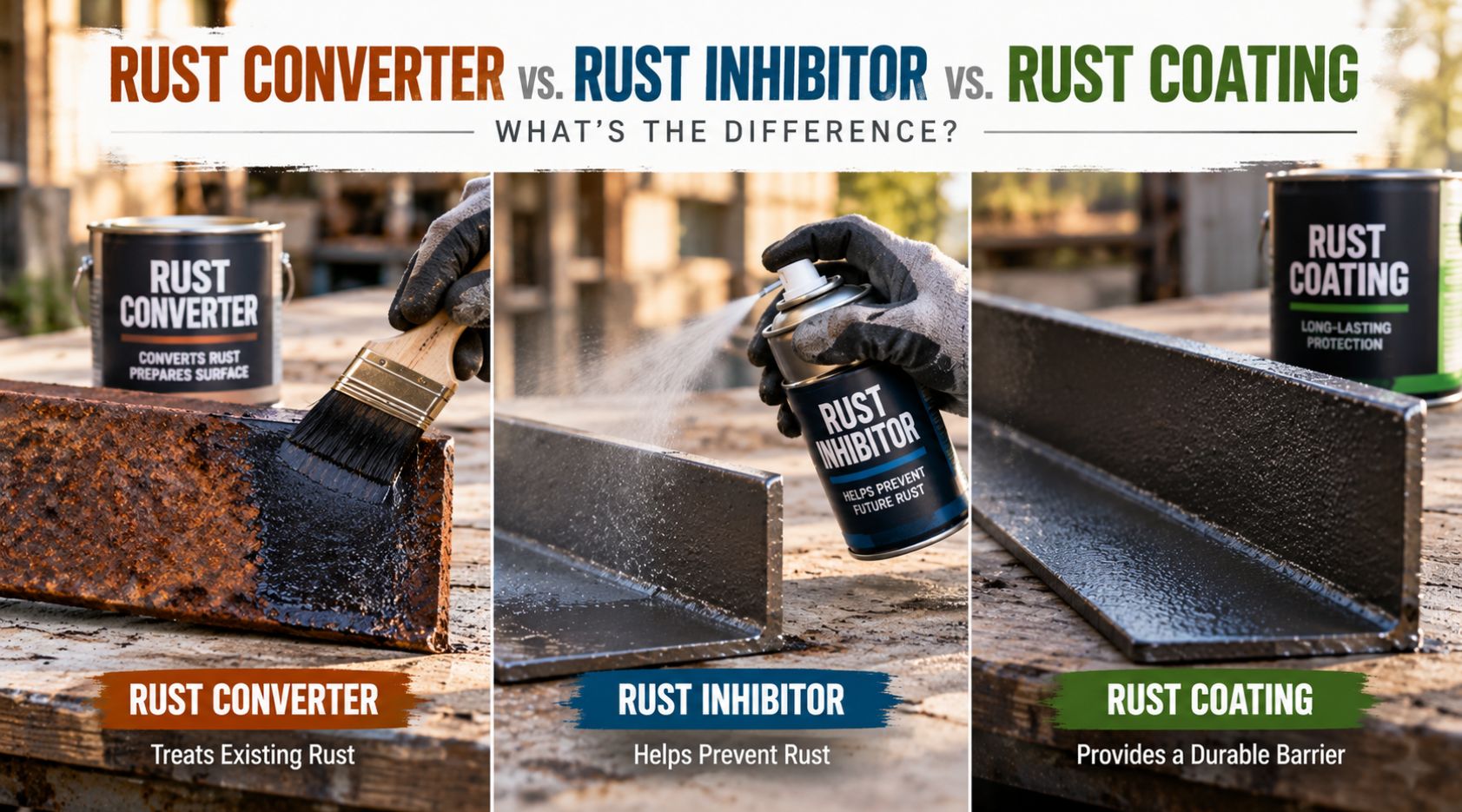
Chemical conversion is a different approach used by rust converter products. Rather than sealing rust away, these coatings react directly with existing iron oxide, converting it into a more stable compound that stops actively corroding and can typically be painted over. This makes rust converters especially useful on surfaces where rust has already taken hold and full mechanical removal isn’t practical.
A third mechanism, sacrificial protection, is used in galvanizing and zinc-rich coatings. Zinc corrodes more readily than steel, so when both are present together, the zinc corrodes first and effectively protects the steel underneath, even if the coating gets scratched, as long as enough zinc remains nearby to keep sacrificing itself.
Main Types of Rust Coatings Compared
| Coating Type | How It Works | Common Use Cases |
| Rust converters | Chemically transform iron oxide into a stable, paintable compound | Surfaces with existing light-to-moderate rust |
| Rust inhibitor coatings | Form a barrier that blocks oxygen and moisture from reaching bare metal | Clean or lightly prepped metal, preventive maintenance |
| Epoxy-based coatings | Hard, chemical-resistant barrier coating with strong adhesion | Industrial equipment, structural steel |
| Polyurethane coatings | Flexible, UV-stable barrier that resists cracking outdoors | Outdoor equipment, vehicles, exposed structures |
| Galvanizing / zinc coatings | Sacrificial metal layer that corrodes in place of the base metal | Fasteners, structural steel, long-term outdoor exposure |
Many real-world projects combine more than one of these approaches, for example applying a rust converter to stabilize existing corrosion, then finishing with a barrier topcoat for long-term protection and a finished appearance.
Rust Converter vs. Rust Inhibitor vs. Rust Coating
These three terms get used interchangeably, but they describe different things. A rust converter chemically transforms existing rust into a stable, paintable surface. A rust inhibitor typically refers to an additive or coating that prevents corrosion from starting in the first place, often through barrier protection or corrosion-inhibiting chemistry mixed into the formula. A rust coating is really the umbrella term covering any protective coating applied specifically to prevent or stop corrosion, which can include converters, inhibitors, and standard barrier coatings depending on the specific product.
Where Rust Coatings Are Commonly Used
- Metal roofing and siding exposed to weather year-round
- Trailers, utility equipment, and agricultural machinery
- Marine equipment, boat trailers, and dock hardware exposed to salt water
- Automotive undercarriages and frames, especially in regions that use road salt
- Industrial machinery and structural steel in manufacturing facilities
- Fences, gates, and other outdoor metal fixtures
- Classic car and equipment restoration projects
- Pipelines and underground metal infrastructure
How to Prepare a Surface Before Applying Rust Coating
Surface preparation has more influence on how well a rust coating performs than almost any other factor, including the specific product chosen. Coatings applied over loose rust, oil, dirt, or contamination tend to fail early, regardless of how good the product itself is.
- Remove loose rust and scale with a wire brush, grinder, or abrasive blasting
- Clean the surface of oil, grease, and dirt with an appropriate degreaser
- Allow the surface to dry completely before coating, since trapped moisture can cause the coating to fail from underneath
- Follow the manufacturer’s guidance on whether the specific product is rated for direct-to-rust application or requires bare metal
- Apply in the temperature and humidity range specified by the manufacturer, since curing outside that range can compromise adhesion
Can You Apply Rust Coating Over Existing Rust?
Some products, particularly rust converters and certain direct-to-metal coatings, are specifically formulated to be applied over light-to-moderate surface rust. Others require the surface to be brought down to bare, clean metal before application. Applying the wrong type of coating over existing rust is one of the most common causes of early coating failure, so checking a product’s technical data sheet before application matters more than most people realize.
How Long Does Rust Coating Last?
Service life depends heavily on the coating type, surface preparation quality, and how harsh the exposure environment is. A well-prepared surface with a quality barrier coating in a moderate climate can last many years before needing attention, while the same coating in a coastal or heavy road-salt environment may need more frequent inspection and touch-up. Rather than relying on a general timeframe, periodic visual inspection for early signs of coating breakdown, such as chalking, cracking, or small areas of bubbling, is the most reliable way to catch problems before they become a larger repair.
DIY Rust Coating vs. Professional Application
For smaller projects like fences, trailers, or individual pieces of equipment, DIY application with a quality brush-on or spray rust coating product is often a practical and cost-effective option, particularly when the manufacturer’s surface prep and application instructions are followed closely.
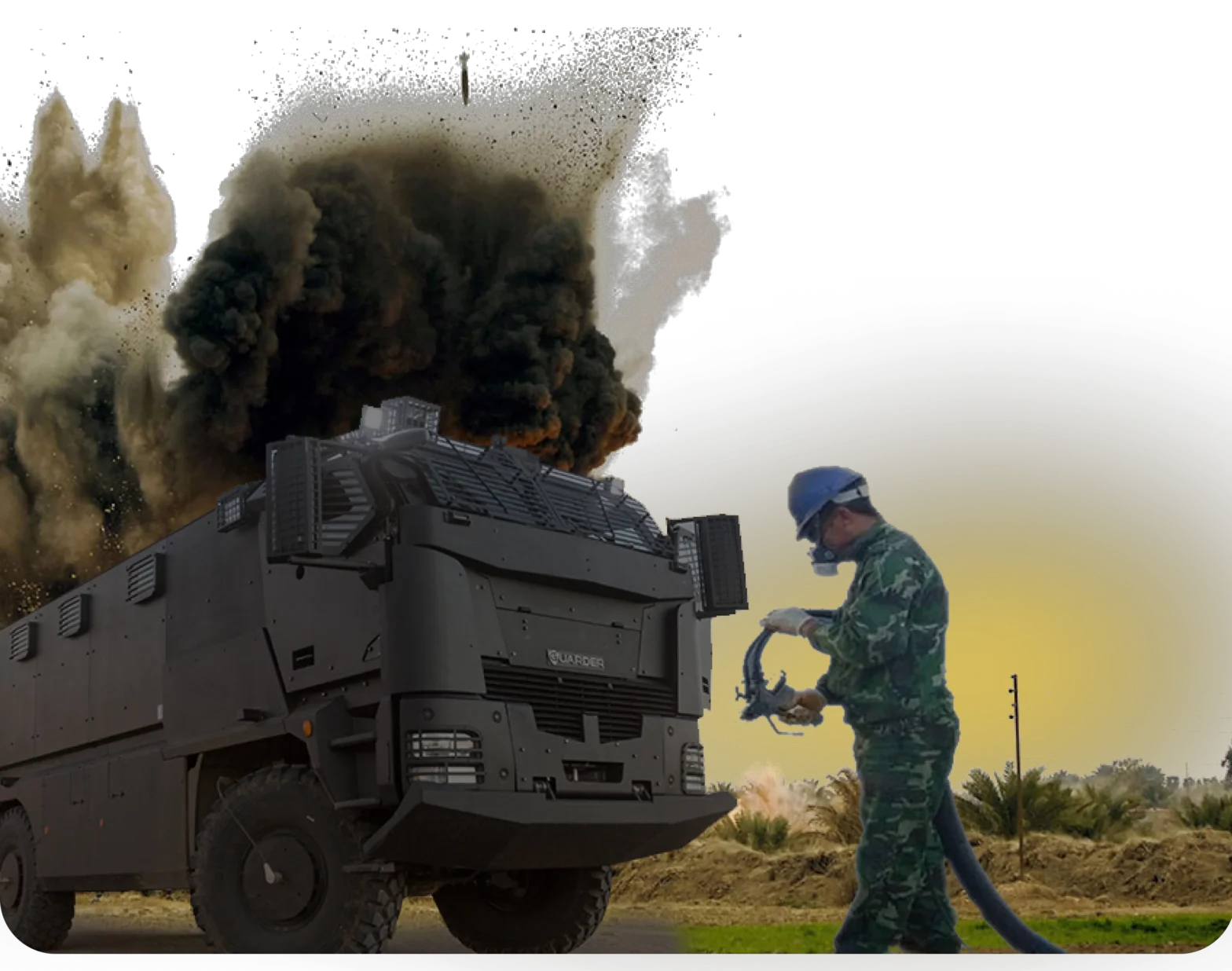
Larger structures, industrial equipment, or projects requiring specific coating thicknesses and certifications typically call for professional application. Professional applicators bring abrasive blasting equipment, controlled spray application, and quality control processes like thickness testing that are difficult to replicate with consumer-grade tools, and the added assurance can matter significantly for structural or safety-critical applications.
Cost is usually the deciding factor for smaller projects, since DIY materials cost a fraction of a professional job, but that comparison changes quickly for larger or harder-to-access equipment. Factoring in the time, equipment rental, and disposal costs that come with proper surface preparation often narrows the price gap between DIY and professional work more than expected, which is worth considering before committing to either route on a bigger project.
Common Mistakes That Cause Rust Coatings to Fail Early
- Skipping proper surface preparation to save time
- Applying a coating not rated for the specific exposure environment, such as using an indoor-rated product outdoors
- Coating over wet or contaminated surfaces
- Applying too thin a coat, leaving gaps in barrier protection
- Ignoring the manufacturer’s recommended cure time before exposing the coating to moisture or handling
- Failing to address the underlying cause of moisture exposure, such as poor drainage, alongside the coating itself
Choosing the Right Rust Coating for Your Project
The right choice depends on a handful of practical questions: Is the surface already rusted, or is this preventive protection on clean metal? Will the coating be exposed outdoors, to UV, or to salt water? Does the project need a specific color or finish, or is protection the only priority? How much surface preparation time and equipment is realistically available? Answering these questions first makes it much easier to narrow down which type of coating, converter, inhibitor, epoxy, polyurethane, or galvanized system actually fits the job, rather than choosing based on price or familiarity alone.
Why Some Metals Rust Faster Than Others
Not every piece of metal corrodes at the same rate, even under identical conditions, and understanding why helps explain why some equipment needs more aggressive protection than others. Alloy composition plays a major role — steel with higher carbon content tends to corrode faster than certain stainless alloys that contain chromium, which forms its own thin, self-healing oxide layer that resists further corrosion. Galvanic corrosion adds another layer of complexity: when two dissimilar metals are in direct contact in the presence of moisture, the more reactive metal corrodes faster while the less reactive one is partially protected, which is exactly the principle sacrificial zinc coatings are built around.
Physical factors matter just as much as chemistry. Metal with a rough, porous, or previously damaged surface corrodes faster than a smooth, well-finished one, since irregularities trap moisture and give corrosion more surface area to start from. Stress points, welds, and areas where two pieces of metal meet are also common starting points for rust, since these spots often have thinner or disrupted protective layers compared to the surrounding material.
Signs a Coating Is Starting to Fail
- Chalking or a dull, powdery residue on the coating surface
- Small blisters or bubbles forming under the coating film
- Cracking or crazing, especially in coatings exposed to significant temperature swings
- Rust bleeding through at edges, seams, or fastener points
- Peeling or flaking at high-wear areas
Catching these signs early usually means a simple spot repair is enough to extend the coating’s service life. Waiting until failure is widespread across the surface typically means a full recoat is needed instead, which takes more time, material, and cost than addressing small problem areas as they appear.
Is rust converter the same thing as rust-inhibiting paint?
No. A rust converter chemically changes existing rust into a stable compound, while rust-inhibiting paint typically works through barrier protection or additives that slow new corrosion from starting. Some products combine both functions.
Do I need to remove all rust before painting?
Not necessarily. Some coatings, particularly rust converters and certain direct-to-metal products, are designed to be applied over light surface rust. Others require bare metal, so checking the specific product’s instructions is important before starting.
What’s the most durable type of rust coating for outdoor equipment?
It depends on the exposure conditions, but polyurethane-based coatings are generally favored for outdoor applications because of their UV stability and flexibility, while galvanizing offers strong long-term protection for steel that will see heavy, sustained outdoor exposure.
Can rust coating be applied in cold weather?
Most coatings have a minimum application and cure temperature specified by the manufacturer. Applying outside that range can affect how well the coating cures and adheres, so it’s worth checking the technical data sheet before working in cold conditions.
Final Thoughts
Rust coating works by breaking the chain reaction between iron, oxygen, and moisture, whether through a physical barrier, a chemical conversion process, or sacrificial metal protection. The specific product matters less than most people assume; surface preparation and choosing a coating actually rated for the exposure conditions the metal will face tend to have the biggest impact on how long the protection actually lasts. Taking the time to match the coating type to the project, rather than grabbing whatever’s available, is what separates a rust repair that lasts for years from one that needs to be redone within a single season.