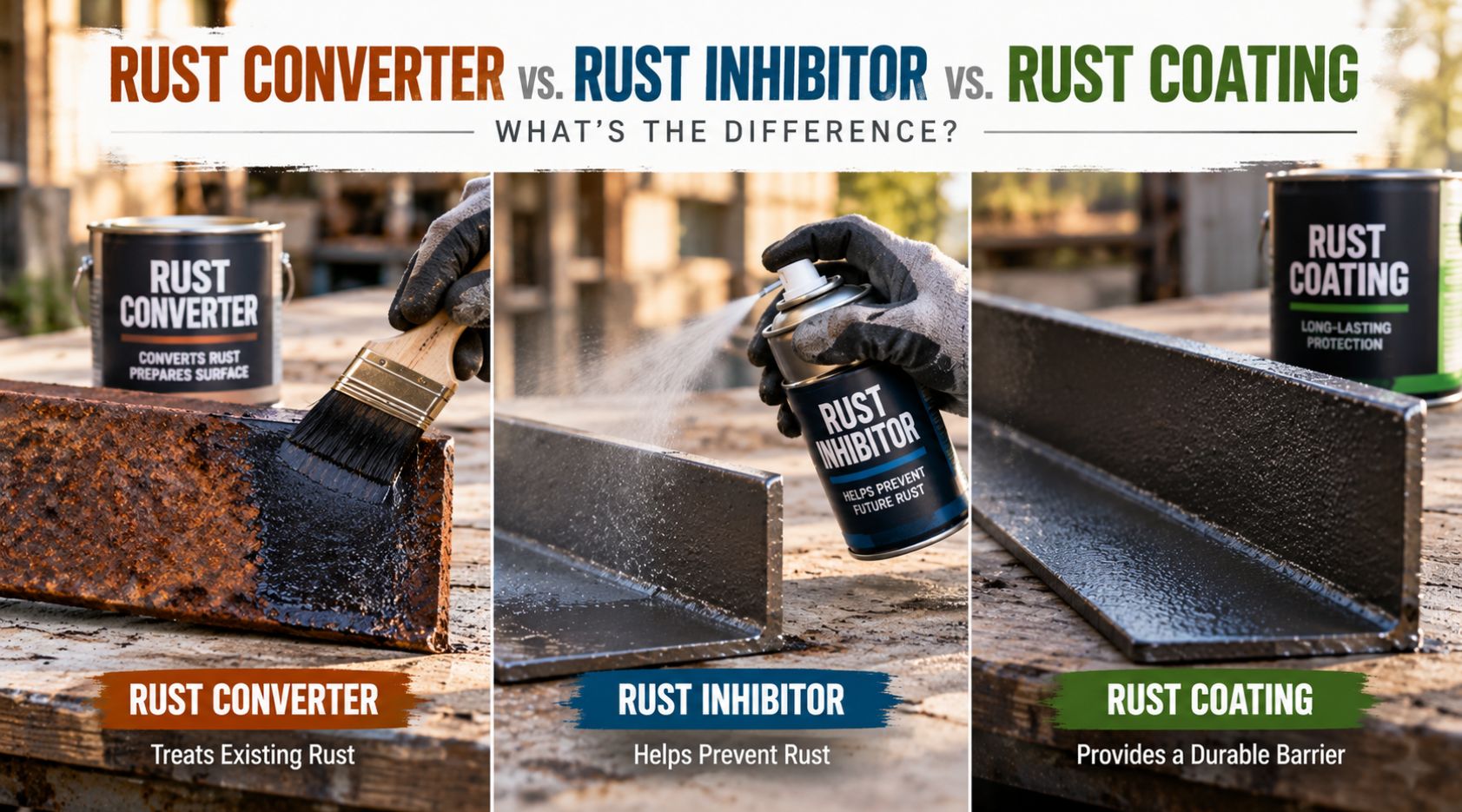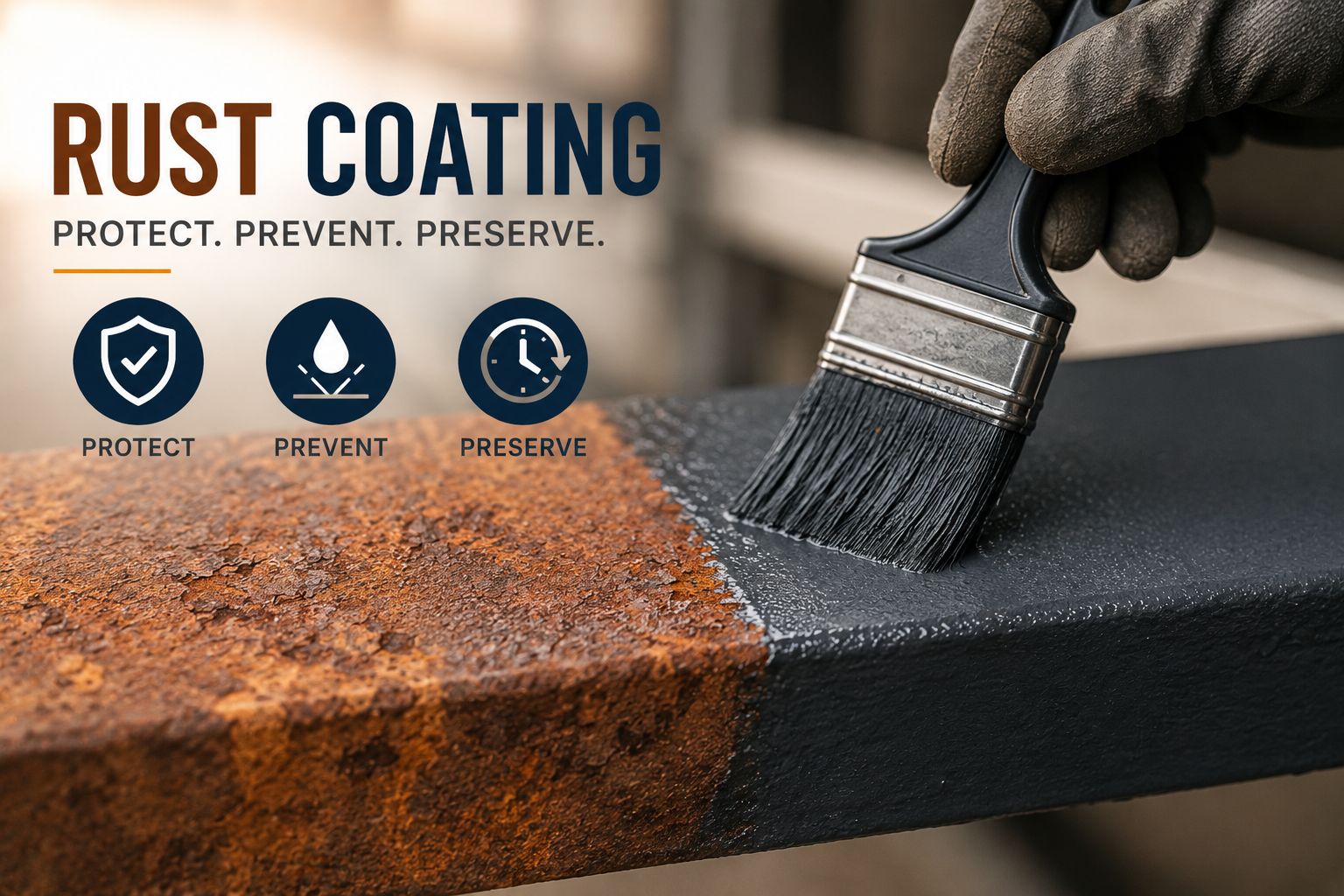


Corrosion costs the United States economy an estimated $276 billion per year — and a significant share of that burden falls directly on the manufacturing and industrial sectors. Plant managers, maintenance engineers, and facility owners who treat industrial corrosion protection as an afterthought or a line item to be cut at budget time are often the same ones authorizing six-figure emergency repairs, unplanned shutdowns, and premature equipment replacements just a few years later.
This piece is written for the decision-makers who want to understand what’s actually happening to their steel — and what it genuinely takes to protect it.
The True Cost of Industrial Corrosion: Beyond the Surface
Most people think of corrosion damage in terms of what they can see: pitted steel, orange streaks, flaking paint. But the true cost of corrosion in an industrial setting goes far deeper. When a structural beam corrodes, the entire bay it supports may need to be shut down for inspection and repair. When a pipeline develops a perforation, the cost isn’t just the pipe — it’s the lost production, the environmental cleanup, the regulatory fines, and the liability exposure that compound the original damage into a crisis.
NACE International (now AMPP) has documented that direct corrosion costs across U.S. industries including manufacturing, utilities, transportation, and infrastructure total more than 3% of GDP annually. For a mid-sized manufacturing facility, that translates to real budget impact that compound over years of deferred maintenance and under-specified coatings.
The “Pay Now or Pay More Later” Reality
A plant manager at a Gulf Coast chemical facility once described their coating budget philosophy this way: “We used to spec the cheapest coating that met the minimum requirement. We spent more on repair and recoat work in three years than we would have spent on a premium system with a proper warranty for the next fifteen.” That story repeats across industries from pulp and paper to food processing to power generation.
The arithmetic is straightforward. A premium industrial corrosion protection system applied to properly prepared steel might cost 30–50% more upfront than the minimum-spec alternative. But when that premium system lasts 12–15 years versus 4–6 years, and when you factor in the labor, production loss, and surface preparation costs of recoating, the premium system often delivers 60–70% lower total cost of ownership.

Understanding Industrial Corrosion Environments
Industrial corrosion protection is not a one-size-fits-all problem. Different industrial environments create radically different corrosion challenges, and the coating system that works perfectly in a dry warehouse will fail quickly in a marine terminal or chemical processing plant. Understanding your specific exposure category is the starting point for any serious corrosion protection strategy.
C1–C5: ISO 12944 Corrosivity Categories
The international standard ISO 12944 classifies corrosive environments into five categories, from C1 (very low — heated indoor facilities with clean atmospheres) to C5 (very high — coastal industrial areas, offshore platforms, chemical plants with aggressive atmospheric exposure). Most industrial facilities fall in the C3 to C5 range, and the coating system required for a C5 environment is dramatically more robust than anything that would be appropriate for a C2 or C3 exposure.
Selecting a coating system calibrated to a lower corrosivity category than the actual environment is one of the most common and costly mistakes made in industrial coating specification. It happens when specifiers rely on generic product data sheets rather than engaging certified coating inspectors to assess the actual environment and service conditions.
Chemical Exposure: A Special Category
Facilities that handle acids, alkalis, solvents, or other aggressive chemicals require specialized immersion-grade or chemical-resistant coating systems that go far beyond standard atmospheric corrosion protection. Epoxy novolac systems, vinyl ester coatings, and fluoropolymer topcoats are commonly specified in these environments, and selecting the wrong chemistry can result in catastrophic coating failure within months.
Food and beverage processing facilities face an additional constraint: many standard industrial coatings are not approved for incidental food contact, and USDA-compliant or FDA-listed products must be used in areas where contamination is a regulatory concern.
The Four Pillars of Effective Industrial Corrosion Protection
Pillar 1: Proper Surface Preparation
No coating system — regardless of cost or quality — can perform well on a poorly prepared surface. Surface preparation is consistently identified by coating failure analysts as the single most important factor in industrial coating performance, accounting for roughly 80% of premature coating failures.
For industrial steel substrates, abrasive blasting to SSPC SP-10 (Near White Metal) or SSPC SP-6 (Commercial Blast) is the minimum standard for most high-performance coating systems. The surface profile — the microscopic peaks and valleys created by blasting — must match the coating manufacturer’s requirements for maximum mechanical adhesion. For immersion service or highly corrosive environments, SSPC SP-5 (White Metal Blast) is often required.
Power tool cleaning (SSPC SP-3, SP-11) may be acceptable for spot repairs and maintenance applications, but is generally not suitable as a primary preparation method for new construction or full system recoats in industrial environments.
Pillar 2: Correct Coating System Specification
An industrial corrosion protection system is a multi-layer structure, not a single product. A properly specified system for a high-corrosivity environment typically consists of a zinc-rich primer (organic or inorganic), a high-build epoxy intermediate coat, and a polyurethane or acrylic topcoat for UV resistance and color retention. Each layer serves a distinct purpose and the system must be designed as an integrated whole.
Zinc-rich primers are particularly important in industrial settings. Inorganic zinc silicate primers, when applied over properly blasted steel, provide true galvanic protection — the zinc sacrificially corrodes instead of the underlying iron, providing active protection even when the coating is damaged. This makes zinc-primed systems dramatically more durable in aggressive environments than systems relying on barrier protection alone.
Pillar 3: Certified Application
The best coating system in the world will fail if it’s applied by an uncertified crew using improper equipment, at the wrong temperature or humidity, without adequate dry film thickness control. NACE/AMPP and SSPC certification programs exist precisely because industrial coating application is a skilled trade with serious technical requirements.
Key application controls include: ambient temperature and dew point monitoring (coatings applied when steel temperature is within 5°F of dew point will trap moisture and fail), wet film thickness gauging during application, and dry film thickness measurement with certified gauges after cure. Holiday detection — using electrical testing to find pinholes and voids in the coating film — is standard practice for immersion service and buried pipeline applications.
Pillar 4: Inspection, Documentation & Maintenance
Third-party coating inspection by a NACE/AMPP Certified Coating Inspector (CCI) is the quality assurance mechanism that protects the facility owner’s investment. An independent inspector verifies surface preparation standards, monitors ambient conditions during application, measures and documents coating thickness, and issues inspection reports that form the basis for warranty claims if performance issues arise.
Proactive maintenance coating programs — scheduled recoating of high-wear zones, annual inspection of coating condition, early repair of damage before it spreads — dramatically extend the life of industrial coating systems and prevent the exponential repair costs associated with deferred maintenance.

Industrial Corrosion Protection by Sector: What’s Different
Oil, Gas & Petrochemical
This sector operates in some of the most aggressive corrosive environments on the planet — offshore platforms, subsea pipelines, refineries processing sour crude, storage tanks holding acids and solvents. The coating systems used in O&G are among the most technically demanding, and the consequences of failure (spills, fires, structural collapse) make over-engineering the norm rather than the exception. Fusion bonded epoxy (FBE), three-layer polyethylene (3LPE), and high-performance thermal spray zinc systems are widely used.
Manufacturing & Processing Plants
Steel structures, equipment frames, conveyors, and process piping in manufacturing environments face moderate to high corrosivity depending on process chemicals and environmental controls. The challenge here is often maintenance access — recoating production equipment typically requires scheduled downtime, making system longevity a high priority. High-build epoxy systems with polyurethane topcoats represent the industry standard for most manufacturing plant environments.
Power Generation
Power plants, including coal, natural gas, nuclear, and renewable facilities, present unique corrosion challenges including high-temperature environments, cooling water systems, flue gas desulfurization units, and coastal or riverine exposure. Thermal spray aluminum (TSA) coatings are commonly used in high-temperature zones, while immersion-grade epoxy systems protect water-contact surfaces.
Water & Wastewater Treatment
Concrete and steel in water treatment facilities face both liquid and vapor-phase corrosion — particularly from hydrogen sulfide gas generated during wastewater treatment, which produces sulfuric acid when it condenses on surfaces. Specialized epoxy lining systems and polyurea coatings designed for sewer and treatment plant service have dramatically extended the service life of these critical infrastructure assets.
7 Warning Signs Your Industrial Facility’s Corrosion Protection Is Failing
- Paint chalking or fading on outdoor structures — typically means UV-degraded topcoat is no longer protecting the primer and substrate beneath.
- Rust “bleeding” through intact paint — the coating has delaminated from the steel, and moisture is actively attacking the substrate under the film.
- Blistering or bubbling of coating surface — classic sign of osmotic blistering, often caused by contaminated surface preparation or coating applied over salt.
- Edge corrosion at welds, fasteners, and cut edges — these areas receive less coating coverage and fail first; they indicate the coating system is at end of life.
- Mechanical damage accumulation — impact damage, scratches, and abrasion that haven’t been spot-repaired create accelerating corrosion clusters.
- You can’t find inspection records for the last coating application — undocumented coating work is a major liability and quality assurance gap.
- The facility is 10+ years old and the original coating system has never been assessed by a qualified inspector.
How to Select an Industrial Corrosion Protection Contractor
Not every industrial painting and coating company has the certifications, equipment, and quality management systems required to deliver compliant industrial corrosion protection. Here’s what to look for:
SSPC QP1 certification is the industry benchmark for industrial coating contractors working in harsh environments. It verifies that the contractor has documented quality procedures, certified supervisors, and the operational capabilities required for complex industrial coating projects. NACE/AMPP certification of coating inspectors ensures that the critical quality control function is handled by someone with verified technical competency.
Ask for a project-specific Quality Control Plan (QCP) before work begins. This document should detail surface preparation standards, ambient condition monitoring procedures, coating products and application methods, thickness verification procedures, and documentation formats. Any contractor unwilling to produce a detailed QCP is not operating at the standard your facility and your budget deserve.
Frequently Asked Questions: Industrial Corrosion Protection
What is the best coating system for outdoor structural steel in a C4/C5 environment?
For high-corrosivity atmospheric environments, the industry standard is a three-coat system: inorganic zinc-rich primer (75–100 μm DFT), high-build epoxy mastic intermediate (125–150 μm DFT), and aliphatic polyurethane topcoat (50–75 μm DFT). Total DFT in the 250–325 μm range provides excellent performance in C4/C5 environments with expected service life of 10–15+ years.
How often should industrial coating systems be inspected?
Annual visual inspection by trained maintenance personnel is the minimum. A formal third-party inspection using adhesion testing, DFT measurement, and condition rating should be performed every 3–5 years, or immediately following any significant mechanical damage or process incident that may have affected coating integrity.
Can industrial coatings be applied in cold weather?
Most conventional epoxy coatings require a minimum ambient and substrate temperature of 50°F (10°C) and must be applied above dew point. Cold-cure epoxy formulations are available for low-temperature application (as low as 35°F / 2°C), but require careful product selection and application control. Year-round industrial projects typically require temperature-controlled containment systems to maintain application conditions.
What’s the difference between industrial corrosion protection and standard commercial painting?
Commercial painting uses architectural-grade products designed for aesthetic durability in low-corrosivity environments. Industrial corrosion protection uses engineered coating systems — typically zinc-rich primers, high-build epoxies, and UV-stable polyurethanes — formulated specifically to resist the chemical, moisture, and physical exposure found in industrial environments. The surface preparation standards, film thickness requirements, inspection protocols, and warranty terms are fundamentally different.
Is your industrial facility’s corrosion protection up to standard? Rust Coatings provides certified industrial corrosion protection for manufacturing plants, petrochemical facilities, power plants, and infrastructure across the United States. Our SSPC-certified crews and NACE-certified inspectors deliver compliant, documented coating systems backed by our 25-year warranty. Request a facility assessment today.