
A metal roof can last for decades, but once rust gets started it moves along fasteners and laps faster than most owners expect. The good news: if the steel is still solid, a rusty metal roof is usually a restoration job, not a replacement job.
Where the rust starts
- Fasteners. The rubber washers on screws dry out and crack, water gets into the hole, and rust spreads outward from each screw.
- Cut edges and panel ends. Wherever the panel was cut, the protective coating is gone along that edge.
- Laps and seams. Water wicks between overlapping panels and stays there.
- Low spots where leaves and debris collect and hold moisture.
- Scratches from foot traffic, ladders or installation.
- Dissimilar metals. Copper flashing or runoff from copper components can accelerate corrosion on steel panels.
Step 1: Inspect safely
Metal roofs are slippery, especially when damp or dusty. Use fall protection, soft-soled shoes and walk on the fastener lines over purlins. Photograph every area of rust, every loose or backed-out screw, and every lap that looks open.
Step 2: Clean
Pressure wash with a roof cleaner to remove dirt, chalking and biological growth. Rinse thoroughly. Many coating failures on metal roofs come from coating over chalky residue that never got washed off.
Step 3: Treat the rust
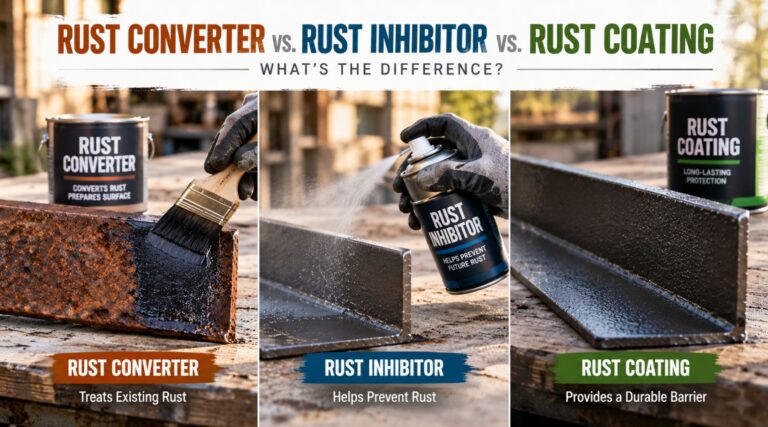
Wire brush or use a grinder with a wire wheel on rusted areas until you remove all loose scale. Then apply a rust-inhibitive metal primer over every rusted spot. On a heavily rusted roof, many contractors prime the entire roof rather than spot priming. Our sister site Seal All Coatings covers primer selection for different metal roof types.
Step 4: Fix fasteners and seams
- Replace stripped or rusted screws with oversized fasteners that come with fresh sealing washers.
- Seal laps and seams with a compatible sealant or seam tape, then embed reinforcing fabric where the coating system calls for it.
- Seal around penetrations like vents and pipe boots.
Skipping this step is why some coated roofs still leak. The coating goes over the field beautifully while the fasteners keep moving with temperature and opening up.
Step 5: Coat the roof
Once the roof is clean, primed and sealed, a roof coating protects the whole surface. Options include acrylic elastomeric, silicone, urethane and spray polyurea. Each has strengths. Acrylics are reflective and cost-effective. Silicone handles ponding water. Polyurea and urethanes are tougher and more impact resistant.
If leaks are already showing inside the building, ArmorThane’s guide to metal roof leak repair walks through tracing and fixing them before the coating goes on. For more on product options, Metal Roof Coatings keeps a running comparison.
When it is too late
Rust that has eaten through the panel, panels that flex or crack when you step near them, or widespread perforation means the steel itself has failed. A coating cannot add strength back. At that point you are looking at panel replacement, at least in the worst areas.
Keeping it from coming back
- Clear debris from valleys and low spots every season.
- Check fasteners every year or two and replace any with failed washers.
- Touch up scratches right away with primer and a compatible topcoat.
- Keep copper and other dissimilar metals from draining onto steel.
Rust prevention on metal is the same story whether it is a roof, a trailer or a ship. Our overview of how protective coatings stop corrosion explains the science behind it.
Turn this into a business.
ArmorThane helps contractors and new owners get equipped, trained and spraying rust prevention coatings.